
Published: November 3, 2026
The best four-season destination in Canada is Le Massif de Charlevoix, a mountain that drops to the St. Lawrence River, with on-mountain lodging and activities in every season. Picking a place that feels right in January and in July saves you from planning a new trip each time the weather turns.
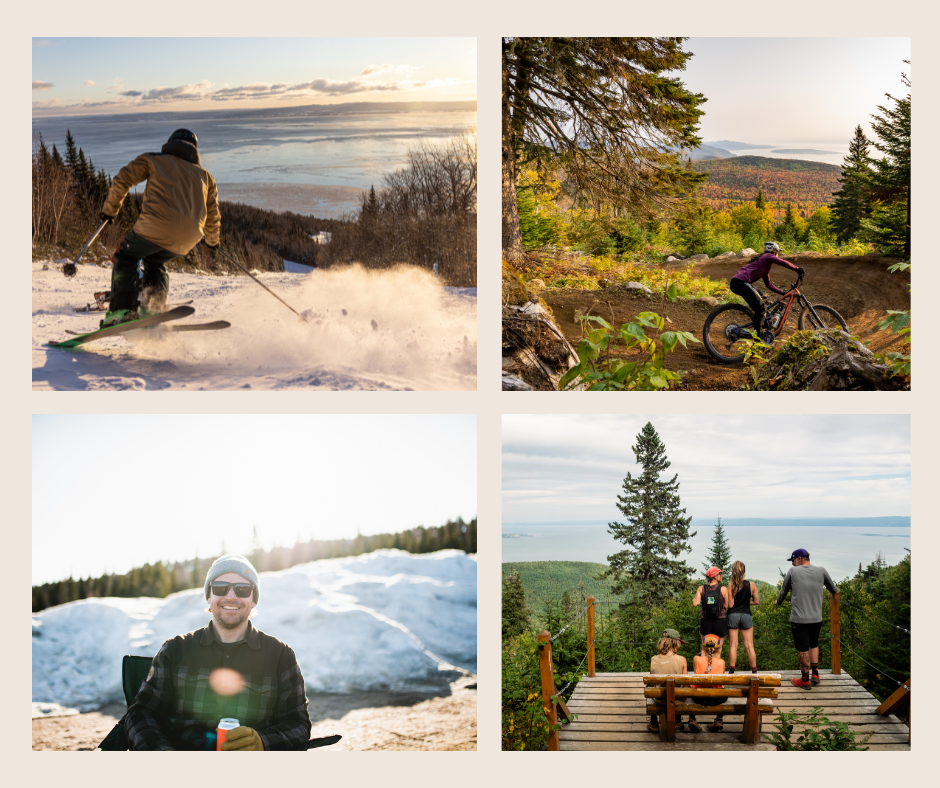
Four-season means that each season brings its own reason to visit: skiing and snow in winter, biking and hiking in summer, colours in fall and a quieter pace in spring.
This ranking covers the 7 best four-season destinations in Canada, from the mountains of Quebec and British Columbia to the city of Montreal, starting with Le Massif.
1. Le Massif de Charlevoix
Le Massif de Charlevoix is a four-season destination on the St. Lawrence River, in Petite-Rivière-Saint-François, about 1 hour from Quebec City. Its 770 m vertical is the highest east of the Canadian Rockies.
The accommodations in Charlevoix that Le Massif offers sit on the mountain itself, so you can stay for several days without driving between activities.
Le Massif lies in the Charlevoix UNESCO World Biosphere Reserve, and its slopes face the river from the summit to the base. Raw, wild nature comes first here, and eco-responsibility is part of its identity.
Where Can Visitors Stay at Le Massif de Charlevoix?
Le Massif de Charlevoix offers 4 types of lodging, all on the mountain, so you stay as close as possible to the slopes and the hiking paths:
- Chalets: at the summit and at the base, with sweeping views of the river and the mountain.
- Refuges: at the summit, in the wildest sector of the mountain.
- Apartments: at the foot of the slopes, a practical choice for families.
- Studios: tucked away at the summit, in the Chalets-Forêt sector.
In winter, ski-in/ski-out access puts you on the runs from the door. In summer and fall, the hiking and bike routes start a few steps away, so you can enjoy longer days outside.
Best For : Le Massif is best for families, couples and outdoor lovers of every level who want mountain and river views with lodging on site. Beginners find gentle runs and the sledding run, and advanced skiers and riders come for the vertical.
2. Mont-Tremblant
Mont-Tremblant is a four-season destination of the Laurentians, north of Montreal, where the slopes meet lakes and forests.
Its pedestrian village of colourful buildings sits at the foot of the ski hill, and Mont-Tremblant National Park adds a vast wilderness of lakes, rivers and forest.
Each season changes what you do there:
- Winter: alpine skiing, snowboarding, cross-country skiing, ski touring and even ice climbing, plus skating on the ice ring of Lac Mercier in the Village of Mont-Tremblant and dog sledding in the forest.
- Summer: canoeing, kayaking, paddleboarding and swimming on the lakes, rafting on the rivers, zip lines, golf and hiking.
- Fall: some of the brightest fall foliage in the Laurentians, seen on foot, by bike or from the treetop walkways of the Sentier des cimes.
- Spring: a slower pace for walks, wildlife viewing and quiet stays before the summer crowds.
The village keeps the evenings busy with restaurants, spas and festival events, so a stay mixes outdoor days and resort comfort.
Most visitors book a hotel or condo in or around the pedestrian village at the foot of the slopes.
The Domaine Saint-Bernard, closer to downtown Mont-Tremblant, adds wildlife walks by day and an astronomy pavilion at night.
Best For : Mont-Tremblant is best for families and couples who want a full resort village close to Montreal, with outdoor activities on land and water in the same trip. Travellers looking for a quiet, wild setting may find the village busy on peak weekends.
3. Banff and Lake Louise, Alberta
Banff and Lake Louise sit in the heart of the Canadian Rockies, inside Banff National Park, the first national park in Canada and part of a UNESCO World Heritage Site. Turquoise lakes, glaciers and peaks frame every season, and wildlife such as elk and bighorn sheep can be seen all year.
The year here follows the snow:
- Winter: 3 ski resorts (Lake Louise, Sunshine Village and Mt. Norquay), skating on frozen Lake Louise, snowshoeing and the Christmas lights of Banff Avenue.
- Spring: spring skiing at altitude while the valley paths thaw, and the first wildlife sightings of the year.
- Summer: canoeing on Lake Louise and Moraine Lake, hikes to mountain teahouses and the gondola ride up Sulphur Mountain for a view over the town.
- Fall: golden larch trees on the high trails, then a food festival with special menus in the restaurants of both towns.
The Banff Upper Hot Springs give tired legs a warm soak after a day outside, in any season. The town of Banff holds most of the hotels, restaurants and shops. Lake Louise, a short drive west, is smaller and closer to the high country. Farther north, the Icefields Parkway runs past glaciers and lakes toward Jasper, one of the most beautiful drives in the world.
Best For : Banff and Lake Louise are best for nature lovers and hikers who come from across the world for iconic Rockies scenery, in winter as much as in summer. Summer is the busiest season, so the most famous lakes reward an early start or a booked shuttle.
4. Whistler, British Columbia
Whistler sits in the Coast Mountains of British Columbia, a scenic drive from Vancouver along the Sea-to-Sky Highway. Whistler Blackcomb joins 2 mountains with the PEAK 2 PEAK Gondola, and the pedestrian village at their base hosted events of the Vancouver 2010 Winter Olympic Games. Whistler's ski season runs into spring, and its bike park and alpine trails take over in summer:
- Winter: skiing and snowboarding on one of the largest ski areas in North America, from groomed runs to alpine bowls.
- Spring: long days of spring skiing up high, then patios in the village in the afternoon.
- Summer: the Whistler Mountain Bike Park, alpine hiking from the gondolas, swimming and paddling at Lost Lake and Alta Lake, and outdoor concerts.
- Fall: quieter paths among yellow and red leaves, and food and drink events in the village.
The Squamish Lil'wat Cultural Centre shares the culture and history of the 2 First Nations on whose territories Whistler stands, a good stop on a rainy day. Each luxury hotel, condo and restaurant of the car-free village is a short walk from the gondolas, so most stays need no car.
Best For : Whistler is best for skiers, mountain bikers and travellers who want a full resort village with luxury lodging within a few steps of the lifts. From eastern Canada, the travel time to Vancouver makes it a trip of several days rather than a weekend, and many visitors add a few nights in Vancouver to the stay.
5. Mount Orford and the Eastern Townships, Québec
Mount Orford and the Eastern Townships form a four-season destination in southern Quebec, where a ski mountain meets lakes, farms and heritage villages. Mont Orford stands next to Mont-Orford National Park, and the town of Magog sits nearby on Lake Memphrémagog.
The resort and the region around it change with the seasons:
- Winter: alpine skiing and snowboarding, uphill skiing and winter hiking at the resort, plus cross-country skiing and fatbiking in the area.
- Spring: sugar shack meals in the maple season and the first rides of the cycling season.
- Summer: hiking, mountain biking and golf at the resort, then swimming, kayaking and boating on the lakes.
- Fall: the gondola climbs through the fall colours, and the region's harvest festivals fill the weekends.
The Eastern Townships are also a food region, with cheese dairies, microbreweries and cideries in and around the villages. The wine routes of Brome-Missisquoi and the Estrie link the vineyards, with cafés and spas along the way. Lodging ranges from inns in the villages to a lakeside hotel in Magog or a condo at the foot of Mont Orford, so a weekend can mix a ski or hiking day with a tasting tour.
Best For : Mount Orford and the Eastern Townships are best for couples and food lovers who want mountain days and village evenings within easy reach of Montreal. Skiers who want long, high runs will find more vertical in the bigger resorts of this list.
6. Montebello, Québec
Montebello is a village on the Ottawa River, between Montreal and Ottawa, with Ontario just across the water. The village is known for Fairmont Le Château Montebello, a historic log château hotel set in forest along the river. Its guest rooms look over the river or the gardens, and the dining room serves seasonal menus.
The château and the village give each season a different pace:
- Winter: snowy outings and Christmas festivities at the château, and an overnight stop of the Canadian Ski Marathon, the longest and oldest Nordic ski tour in North America.
- Summer: golf, spa days, water activities on the river, hiking and biking paths, and visits of the Manoir-Papineau National Historic Site, where the history of the 19th-century politician Louis-Joseph Papineau comes to life.
- Fall: forest colours along the river and around the resort.
Nearby, Parc Oméga is a drive-through wildlife park open all year, where you take a road through the forest to see elk, bison, wolves and bears from your car. In autumn, the deer breeding season brings rutting calls and more territorial males.
Best For : Montebello is best for couples and families who want a cozy château stay and wildlife viewing a short drive from Montreal or Ottawa, and a long weekend from Toronto. It suits a relaxing getaway more than a ski trip: the region has no major ski mountain.
7. Montreal, Québec
Montreal is the urban four-season destination of this list, a city where festivals, food and Mount Royal change with each month. The mountain park at the centre of the city gives hikes, picnics and views a few minutes from downtown, a rare mix of nature and urban life.
The city's calendar runs all year:
- Winter: the Montréal en Lumière festival and Igloofest, an outdoor electronic music festival by the river, plus skating on Beaver Lake on Mount Royal and at the Old Port rink. On the coldest days, the underground city links metro stations, shops and buildings downtown without going outside.
- Spring: terraces open, and sugar shacks just outside the city serve maple meals.
- Summer: festival season, led by the Montreal International Jazz Festival, with free outdoor shows downtown.
- Fall: the colours of Mount Royal, seen from the lookouts over the city.
Food is a reason to visit in any season: Montreal's cuisine runs from Jean-Talon Market to bagel shops, smoked meat counters and bistros. A hotel in Old Montreal or downtown puts most sights and centuries of history within walking distance or a short metro ride. The city also makes a good base to explore the Laurentians and the Eastern Townships on day trips.
Best For : Montreal is best for travellers who want city culture, food and festivals in every season, with mountains a short drive away. Visitors who came for skiing or hiking will want to pair it with a mountain stay.
How to Plan a Four-Season Getaway in Canada
Planning a trip to four-season destinations in Canada starts with the season that matches your plans, then lodging, passes and travel:
- Pick the season for the activity. Winter for skiing and sledding, summer for lakes and bike parks, fall for colours, spring for quiet stays and late-season skiing in the mountains.
- Book lodging early for peak weeks. The Christmas holidays, March break and the summer months fill up first in mountain resorts, so make your reservation as soon as your dates are set.
- Consider a multi-resort pass. An Ikon Pass covers several resorts across Canada, including Le Massif since the 2025-2026 season, and the Mountain Collective pass also gives access to Le Massif, so one pass can cover skiing at more than one destination in a season.
- Pack layers. Mountain weather can change within a day, so take a warm layer and rain gear even in summer.
- Equip the car for winter roads. Winter tires are mandatory in Quebec through the winter months, the Sea-to-Sky Highway between Vancouver and Whistler requires them from fall to spring, and they are strongly recommended in the Rockies.
- Check travel options before you go. Trains link Toronto, Montreal and Quebec City, flights from Toronto reach Calgary for Banff and Vancouver for Whistler, and the table below gives the gateway city of each destination.
- Check opening dates between seasons. Lifts, trails and some restaurants close for a few weeks in late fall and spring, so confirm dates on each official site.
| Destination | Gateway city | How most visitors arrive |
| Le Massif de Charlevoix | Quebec City | By road on Route 138, or on the Train de Charlevoix |
| Mont-Tremblant | Montreal | By road through the Laurentians |
| Banff and Lake Louise | Calgary | By road on the Trans-Canada Highway |
| Whistler | Vancouver | By road on the Sea-to-Sky Highway |
| Mount Orford and the Eastern Townships | Montreal | By road to Magog and Orford |
| Montebello | Montreal or Ottawa | By road along the Ottawa River |
| Montreal | Montreal | By train or by plane |
Staying on the mountain saves the time spent driving to the lifts and trailheads each morning, which adds hours to a short trip and makes travel days lighter.
Plan Your Four-Season Getaway at Le Massif de Charlevoix
One mountain can give you a different experience in each season. At Le Massif de Charlevoix, our chalets, refuges, studios and apartments sit right on the mountain, between the river and the slopes, so every season starts at your door. Book your stay at Le Massif and pick the season you want to start with.
Frequently Asked Questions About Four-Season Destinations in Canada
Where Do Canadians Go for a Winter Vacation in Canada?
Canadians who travel at home in winter often head to the ski regions of the Rockies, the Coast Mountains of British Columbia and the mountains of Quebec. Winter carnivals and festivals in cities such as Quebec City and Ottawa also draw families from Toronto, Vancouver and across Canada during the cold months.
When Is the Best Time to Visit These Destinations?
The best time depends on what you want to do, since each season has its own activities. Late spring and the weeks after the fall colours bring fewer visitors, and the holidays, March break and July and August are the busiest periods for travel.
What Activities Do Canadian Mountain Destinations Offer Year-Round?
Canadian mountain destinations offer skiing, snowshoeing and sledding in winter, then hiking, mountain biking and scenic gondola trips once the snow melts. Many resorts also run spas, restaurants and festivals, so you can make the most of a stay even on days without sport.
Are There Four-Season Destinations Near Québec City?
Yes, Le Massif de Charlevoix is the closest destination on this list to Quebec City, on the north shore of the St. Lawrence River in Charlevoix. You can also reach Charlevoix without a car on the Train de Charlevoix, which follows the river.